




Valued Client
On This Page
The guides below, written and approved by founding attorney Peter Diiorio, explain what your policy and Colorado law owe you, the deadlines, and when it is time to get help. Lantern Law Group’s Colorado Springs office is currently representing Aspen Acres, the policyholders.
The Aspen Acres Fire: What Happened
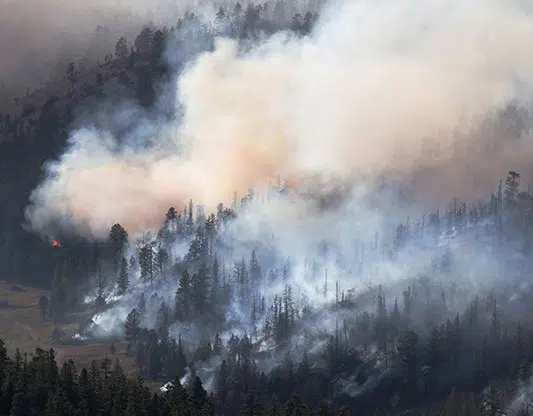
The Aspen Acres Fire ignited on the morning of Monday, June 29, 2026, near the Aspen Acres campground and Highway 165 in eastern Custer County, about 20 miles southwest of Pueblo, and ran east into Pueblo County under red flag conditions, with evacuations extending into Fremont and Huerfano counties.
By the time it was contained, it had burned about 102,000 acres, making it the seventh-largest wildfire in Colorado history, and it destroyed more than 300 homes and more than 775 structures, the most homes lost to a Colorado fire since the 2021 Marshall Fire.
The communities evacuated or damaged include Beulah, Colorado City, Rye, San Isabel, Wetmore, Lake Isabel, and Lazy Acres.
- Ignition: morning of June 29, 2026, Highway 165 corridor, eastern Custer County (Colorado Sun; Colorado Public Radio).
- Size: about 102,000 acres; seventh largest in state history (Colorado Sun).
- Homes and structures destroyed: more than 300 homes; more than 775 structures (Colorado Sun structure tracker; Gazette; Insurance Business). Official counts have varied between sources.
- Disaster declaration: Governor Polis declared a disaster on June 29, 2026, and the Colorado Division of Insurance named the Aspen Acres Fire among the governor-declared wildfire disasters in its July 6, 2026 consumer advisory, which triggers the statutory protections described below.
- Insurance moratorium: The Division of Insurance adopted Emergency Regulation 26-E-04 in August 2026, restricting cancellations and nonrenewals of property policies in the areas affected by the fire.
- Federal assistance: FEMA’s declaration for the June and July wildfires and flooding provides public assistance to governments only. No FEMA Individual Assistance is available to the households that lost homes, which makes the insurance claim the recovery.
- Cause: authorities stated on July 2 that the fire was human-caused. The Colorado Division of Fire Prevention and Control’s investigation, as reported in mid-October 2026, attributed the ignition to a tree falling onto energized San Isabel Electric Association lines near the Highway 165 corridor. A lawsuit filed on July 15, 2026, in the Pueblo County District Court (case 2026CV30580) alleges that the utility is responsible. Those remain allegations and findings outside your insurance claim; see “Two Claims, Not One” below.
Your Colorado Wildfire Rights at a Glance
Colorado’s homeowners insurance statute, C.R.S. 10-4-110.8, provides policyholders who suffer the total loss of a furnished, owner-occupied home during a governor-declared wildfire disaster with protections that most carriers will not offer.
The Aspen Acres Fire qualifies as a declared disaster. Whether your loss qualifies depends on your policy, your occupancy, and the extent of the damage, and each guide below explains the conditions.
- A copy of your policy within three business days of your request, including every endorsement. Ask in writing.
- At least 65 percent of your contents limit without an inventory for a qualifying total loss, offered within five days after the carrier determines the claim is a valid total loss. On a $300,000 contents limit, that is $195,000. Accepting it does not waive the remaining 35 percent, which is available with a supported inventory.
- At least 365 days to submit a contents inventory, and payment of undisputed items within 30 days of submission.
- At least 24 months of additional living expenses, with two six-month extensions available for permitting and construction delays beyond your control, and loss-of-use payments due within 20 days after the carrier receives documentation such as a signed lease.
- At least 36 months from the first actual cash value payment to recover withheld depreciation on the dwelling, with extensions available; for contents, the later of 36 months or 365 days after living expense coverage ends.
- The right to rebuild elsewhere or buy a replacement home and still collect replacement cost, and in qualifying cases to apply other-structures benefits toward the residence.
- Protection from cancellation and nonrenewal in the affected areas under Emergency Regulation 26-E-04, and at least 60 days’ notice with stated reasons for any homeowners nonrenewal statewide.
- Two times the covered benefit plus attorney fees and costs when a carrier unreasonably delays or denies payment, under C.R.S. 10-3-1115 and 10-3-1116.
Smoke-only and partial losses in standing homes do not receive the total-loss protections, and FAIR Plan policies require a separate review. The underlying policy still governs those claims, and the smoke damage guides below cover them.
The Claim Timeline From June 29, 2026
There is no single Aspen Acres deadline. Reporting the loss, submitting a proof of loss, documenting contents, replacing property, extending living expenses, and filing suit each run on a different clock, and most of them start from an event in your own claim rather than from the date of the fire.
The dates below are public milestones and statutory minimums; your policy and claim file set the dates that apply to you.
- June 29, 2026: fire ignites; Governor’s disaster declaration.
- July 6, 2026: Division of Insurance advisory names Aspen Acres a declared wildfire disaster; statutory total-loss protections apply to qualifying claims.
- July 12, 2026: Pueblo County begins resident re-entry.
- July 15, 2026: San Isabel Electric complaint filed in Pueblo County District Court.
- August 2026: Emergency Regulation 26-E-04 adopted.
- Within three business days of your request: complete policy copy due from your carrier.
- Within 20 days of documentation: loss-of-use payment due on a qualifying total loss.
- Within five days of a valid total-loss determination: the 65 percent contents offer.
- At least 365 days after the total-loss claim: the minimum window to submit a contents inventory.
- At least 24 months of ALE from displacement, which for most Aspen Acres households runs into mid-2028 before extensions.
- At least 36 months from the first actual cash value payment: the minimum window to submit dwelling replacement cost receipts. A first ACV payment on September 15, 2026, for example, sets the earliest date to September 15, 2029.
- Suit against the insurer: generally three years from accrual for breach of the policy and two years for common-law bad faith; a homeowners policy cannot shorten those periods.
A later discovery of damage, a verbal extension, or a payment marked “final” does not restart or pause any of these. The deadlines guide explains how to keep a record that identifies the trigger for each one.
Two Claims, Not One
Many Aspen Acres homeowners are being contacted about the lawsuit against San Isabel Electric. That case asks whether the utility is legally responsible for causing the fire. Your insurance claim asks your own carrier to pay the benefits your policy promises. They are separate claims, with separate deadlines, separate evidence, and in most cases separate lawyers, and you do not need to wait for the utility case to be resolved before pursuing your insurance benefits.
The two paths do interact. If your carrier pays your claim and the utility is later found liable, the carrier may assert subrogation rights to recover what it paid from any recovery by the utility, and a release signed in one matter can affect the other.
Receiving a letter about the lawsuit does not make you a plaintiff in it, and a fee agreement for a utility claim does not cover an insurance dispute, or the reverse. Lantern Law Group’s focus is the insurance claim. If you already have counsel for a utility claim, tell us so the two can be coordinated.
“Peter was very knowledgeable and responsive. He was able to answer all inquiries and suggest the next step for me. I highly recommend him for any legal issues you may have. His follow up and follow through is impeccable. 5 stars for sure.”

Aspen Acres Claim Guides
Each guide below was written and approved by attorney Peter Diiorio and addresses one question Aspen Acres policyholders are asking. Start with the one that matches where your claim is today.
Getting paid
- Aspen Acres Smoke Damage Insurance Claims
- Additional Living Expenses After the Aspen Acres Fire
- Delayed or Underpaid Aspen Acres Insurance Claims: What to Do
- Aspen Acres Insurance Benefits You May Have Overlooked
Colorado protections
- Colorado’s 65% Contents Payment After Aspen Acres: Eligibility
- Aspen Acres Insurance Claim Deadlines: Which Date Applies?
- ACV, Replacement Cost, and Depreciation After Aspen Acres
- What Is Insurance Bad Faith in Colorado?
- Colorado Insurance Bad Faith Damages and Calculation Examples
- Can Your Insurer Cancel or Nonrenew Your Policy After the Aspen Acres Fire?
Rebuilding and contents
- Aspen Acres Rebuilding Costs and Insurance Estimate Disputes
- Aspen Acres Contents Claims: Documenting Personal Property
- Aspen Acres Pack-Out and Storage Insurance Charges
- Rebuilding Costs Exceed Your Insurance Limit: Were You Underinsured?
- Mortgage Company Holding Your Aspen Acres Insurance Check?
Process and disputes
- Smoke Odor After Cleaning: Aspen Acres Fire Insurance Claim Disputes
- Public Adjuster or Insurance Lawyer After Aspen Acres: Which Help Do You Need?
- Insurance Appraisal After Aspen Acres: Process, Costs, and Limits
- Before You Sign an Aspen Acres Insurance Release or Settlement
- Your Insurer Requested an Examination Under Oath: What Now?
- Can You Sue Your Insurer After the Aspen Acres Fire?
The utility case
- Aspen Acres San Isabel Lawsuit: The July 15, 2026 Complaint
Standing Homes and Burn-Scar Flooding
Most of the homes inside the fire perimeter did not burn. Hundreds of standing homes in Rye, Beulah, Colorado City, and the surrounding areas were affected by smoke, soot, and ash, and a home does not have to burn to have a fire claim. The claim is covered when testing connects the residue in the house to the fire, and the carrier’s instinct to call it “cosmetic” or to approve a surface cleaning without an assessment is the most common dispute we see on standing homes.
The smoke damage guides explain what testing should establish, what a restoration scope should include, and what to document when the odor returns after cleaning.
The fire also changed the ground. Burn scars shed water, and the flash flooding and debris flows that followed the summer rains caused losses of their own in the drainages below the fire. Those are flood losses, excluded from homeowners policies and covered only by an NFIP or private flood policy.
The Division of Insurance has advised residents in fire-affected areas to consider flood coverage before the next season. A home damaged first by smoke and then by a debris flow has two claims under two policies, and the carriers will each point at the other.
Local Resources
- Colorado Division of Insurance consumer services: 303-894-7490 or 1-800-930-3745. Complaints, the July 6 advisory, and Emergency Regulation 26-E-04.
- 2-1-1 Colorado: housing, food, and recovery referrals.
- Crisis Cleanup: (970) 283-7325 for volunteer debris and cleanup help.
- Pueblo County and Custer County emergency management offices: re-entry, debris removal programs, and permit information for rebuilding.
- United Policyholders 2026 Colorado Wildfires recovery hub: inventory tools, sample letters, and recovery guides from a national policyholder nonprofit.
- Lantern Law Group, Colorado Springs: 7035 Campus Drive #303, Colorado Springs, CO 80920. (855) 972-0000. Consultations by appointment, in person or by phone.
Request a Consultation Today
Our Colorado attorneys have more than 20 years experience and are ready to fight for you.
Aspen Acres Insurance Questions, Answered
Do I need an inventory to get paid for my contents?
Not for the first payment, if your loss qualifies. For the total loss of a furnished, owner-occupied home in a declared wildfire disaster, your carrier must offer at least 65 percent of your contents limit without an inventory. The remaining 35 percent requires a supported inventory, which can be built from photographs, statements, and order histories rather than receipts, and you have at least 365 days to submit it.
How long will my additional living expenses last?
For a qualifying total loss, at least 24 months, with two six-month extensions available when permitting or construction delays beyond your control push the rebuild out. Duration and dollar limit are different questions; check what remains of the ALE limit on your declarations page. For a smoke-damaged standing home, ALE applies, and covered restoration keeps you out under the policy’s own terms.
My home is still standing. Do I have a claim?
Possibly, yes. Smoke, soot, ash, and heat damage to a standing home is covered when the evidence connects it to the fire. Living near the fire is not enough by itself; documented residue in the insulation, ductwork, and soft goods by a qualified industrial hygienist is. The statutory total-loss protections do not apply to a standing home, but the policy does.
Can I move instead of rebuilding?
Usually, yes. Colorado law gives qualifying total-loss policyholders the right to rebuild elsewhere or buy a replacement home and still collect replacement cost, measured by the cost to rebuild the home you lost, not the price of the one you buy. Review the loss-settlement provision and the replacement deadlines before you commit.
What if I was underinsured?
Separate underpayment from underinsurance first. Extended replacement cost, ordinance or law coverage, debris removal paid above the limit, and other-structures benefits applied toward the residence can narrow the gap. If the policy was never adequate, there may be a separate claim for how it was sold. The Division of Insurance’s Marshall Fire study found destroyed homes were 36 to 67 percent underinsured, so you are not alone.
Can I take a San Isabel settlement and keep my insurance money?
Not necessarily both in full. If your carrier paid your claim, it may assert subrogation rights against any utility recovery for the amounts it paid, and the releases in each matter can affect the other. Have both agreements reviewed together before you sign either.
What happens to my mortgage?
The loan is still due, and the mortgage company will be a payee on the dwelling check. Under C.R.S. 38-40-106, a servicer must disclose its disbursement conditions on request, respond to your repair plan within 30 days, and release the proceeds on a statutory schedule: all of it when the total is $40,000 or less, and otherwise the greater of $40,000 or 33 percent up front, for borrowers who are current. Contents and living expense payments generally are not subject to the mortgage company’s interest.
Is there a deadline I am about to miss?
Possibly, and it depends on your claim file rather than the fire date. The proof-of-loss deadline runs from the carrier’s request, the inventory window from the total-loss determination, the replacement windows from the first actual cash value payment, and the suit limitations from accrual. If a date may already have passed, do not abandon the claim on the strength of a general article; have the policy and the timeline reviewed.
Start With a Free Policy and Claim Review
Tell us where your claim stands and what the insurance company has said. Peter will review your policy, the carrier’s letters, and your payment history at no cost and give you a straight answer about what remains unresolved and which deadlines matter.
Bring what you have: the policy, the letters, the estimates, the photographs, and the payment records. We can request the rest.

Contact us today
Ready to Discuss Your Property Insurance Claim?
If your claim has been denied, delayed, or underpaid, don't wait to push back — deadlines matter.
Call or Text
Office
Proudly serving homeowners and small businesses throughout Colorado, Louisiana, Texas and Florida.
We’re ready to help.
Free review. No obligation. No fee unless we win.
"*" indicates required fields